

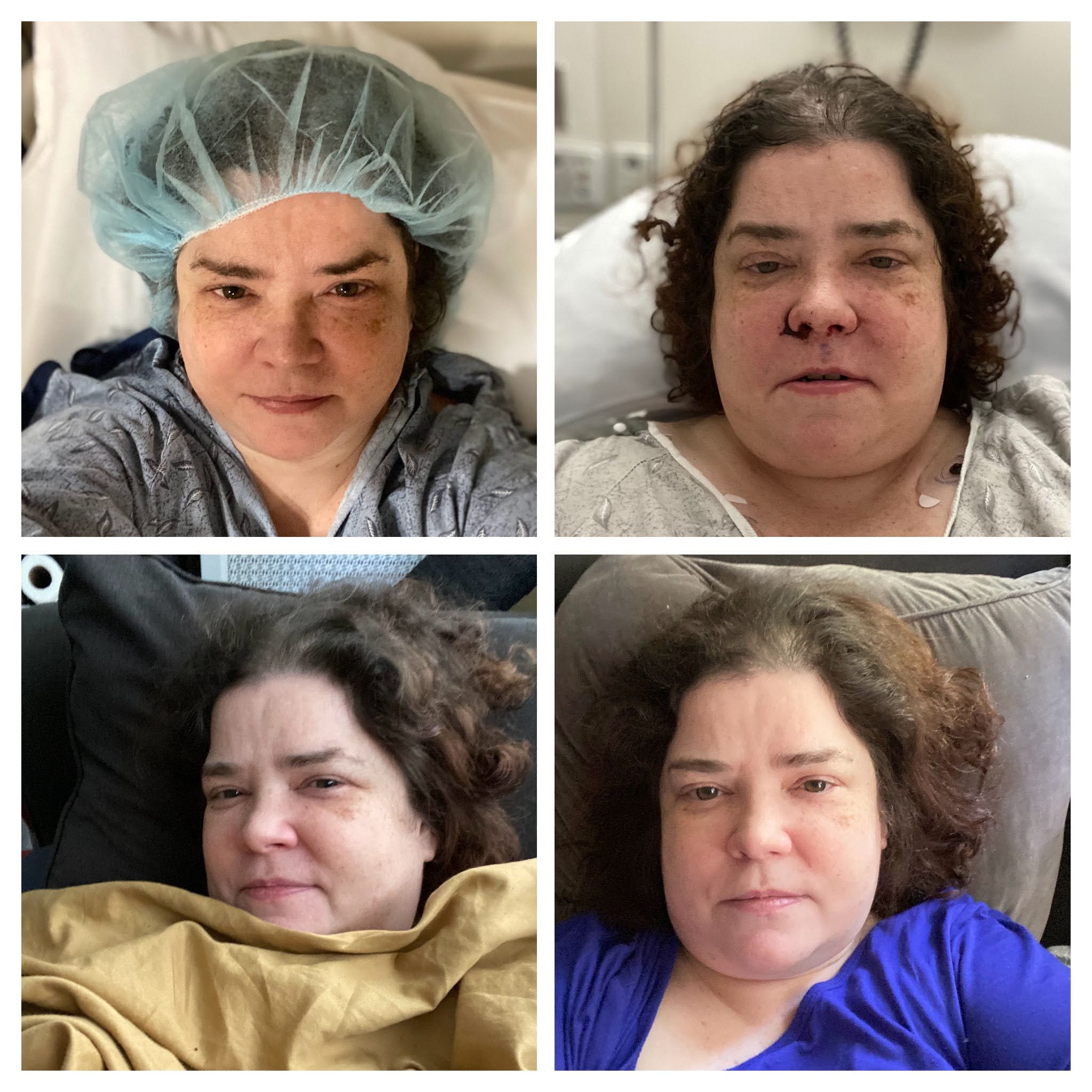
Four years ago today, a neurosurgeon threaded instruments through my nose and into the front center of my head to remove a pituitary tumor. In my mind, it was “brain surgery lite”—no gruesome cracked skull, just a little “up the nose with a rubber hose” action. No biggie, right?
People often remember surgeries by the hospital. But this story, not one to follow tropes, starts the Friday before.
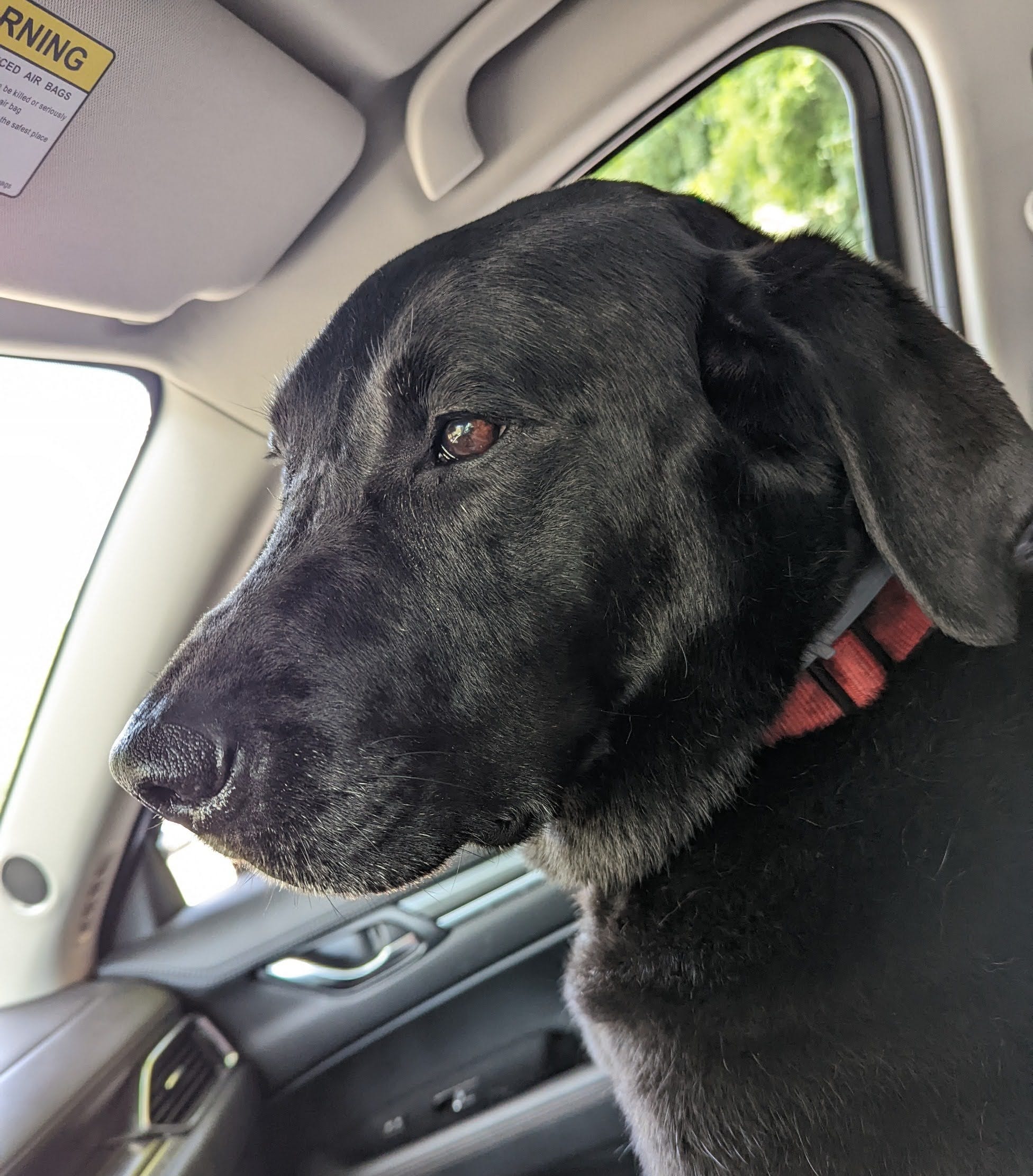
A heat wave had settled over Greater Boston, the kind where you migrate from one air-conditioned building to another because existing outdoors feels like work. After biding my time while the girl attended her Early Intervention playgroup the next town over, I drove from errand to errand, with Rally riding in the roomy cargo area of our Mazda CX-5. Poor Rally girl was a heat magnet, with her thick Lab coat (black fur, not white cotton) and eighty pounds of enthusiastic street-pizza grazing weighing on her hips.
We picked up takeout before driving the hour-plus to the suburbs through summer Cape traffic. Mom and I were slated to tackle the upstairs room my parents want to convert into a laundry room and extension of their closet space.
Brain surgery was scheduled for the following week. It was going to be a while before I could help again. I remember looking around that half-finished room with the peculiar awareness that settles over you before something big. Not dread. Not fear exactly. Just the quiet recognition that life was about to divide itself into before and after, even as I didn’t know what “after” entailed.
Rally came on the trek because she always did. She was part of the rhythm of family life—errands, holidays, road trips, and ordinary Saturdays—with the same quiet attention she had once brought to her work as my mother-in-law Sandy’s mobility service dog. We were looking forward to her first trip to the cabin in Maine, once pandemic conditions and brain-surgery recovery permitted. I couldn’t wait for her to discover salt marshes, tide pools, and every irresistible low-tide stench the shoreline had to offer.
Instead, that afternoon, my father watched her collapse in the backyard while living her best life: happily galloping with the other two doggos. The heat had just broken, and the pack tore outside to celebrate. At first, he thought she was doing one of her dramatic drop-and-rolls to marinate in something especially foul. Our best guess, from his description, is that she was gone before she hit the ground.
Dad came upstairs to get me, but I couldn’t understand what he was trying to tell me. I followed him outside into the rain and threw my body over hers on the wet ground, wailing, while my parents worried about me lying there getting soaked. That must have been a sight.
Then there were the logistics, because there are always logistics. I had to call Turlach at work. I had our only car, so Dad drove to pick him up. Turlach called the vet, who referred us to a dog mortician. The mortician arrived in my parents’ driveway before Dad and Turlach did and waited patiently so Turlach could say goodbye. He was compassionate and lovely. We had Rally cremated; her remains are now tucked out of sight on the bottom living-room bookshelf beside Sandy’s. We collected ourselves and drove home. Our resident haus panther, Gus, was clearly confused. Where was Rally girl?
The experience was beyond surreal. One moment I was preparing for brain surgery. The next we were grieving the faithful companion slotted to hog the bed during my impending convalescence.
There wasn’t time to grieve properly. Brain surgery has a way of charging through with main character energy. There were bags to pack, instructions to follow, arrival times to remember, consent forms to sign, and a growing stack of practical details demanding attention. Every task was absurd—insult, meet injury: How was I supposed to remember to pack lip balm when my dog had simply . . . disappeared?
Grief took a number and sat down in the waiting room beside my husband and all the precious milestones Cushing’s disease had stolen from me during its lunch break. It would have to wait until the neurosurgeons were done with me.
Looking back now, I wonder whether that week planted one of the central questions of this entire project. Sometimes life doesn’t hand us one story at a time. Sometimes it shouts them all at once, a cacophony overstimulating our nervous systems to the point of collapse so that we have no choice but to start from scratch and rebuild. We stumble forward—gotta keep the momentum going—tripping over our own broken hearts.
Maybe that’s where the real story begins.
My recollection of the days in between is murky at best. I don’t recall packing. The mundane details I usually center are absent. I don’t remember the night before surgery, or what we told my daughter. I know she went to my parents’ house to run around with her cousin. I don’t think she even slept there that night—Turlach needed his emotional-support toddler—but I may be recollecting that wrong.
Even the hospital came with a strange historical loop. I was having the tumor removed by a team within a pituitary program that traces its lineage to the surgeon for whom my disease was named. I don’t know enough about the man to be truly upset with him, much less cast him as the villain in a pervasive global system. But I do like to point out Satan’s work of the patriarchy before it disappears into the wallpaper: medicine has a long habit of naming diseases for the men who described them, rather than for what happens to the people who live with them. Still, there it was. I had arrived in the institutional lineage of the man whose name my disease had made me carry.
The hospital returns in fragments. I think Turlach and I took selfies. I will have to find them and see what they remember for me. With my thin, rolling, uncooperative veins, the IV is always the worst part. I vaguely recall the person placing it being unnecessarily unkind about the difficulty, but even that memory will not hold still long enough for me to trust every edge of it.
I remember being wheeled toward surgery and watching the ceiling pass above me. Once they give you the good stuff, everything gets hazy.
I woke in the ICU. The IV in my hand hurt worse than the brain surgery. The pain kept increasing over the next few days. By the time someone finally listened, my protest had dwindled to a pathetic whimper. They called for the ultrasound cart and replaced the line.
The test results were good. Cortisol governed what came next. The adjustment was nasty. Survival logistics reigned supreme; grief was excused from the table.
At home, I was either asleep or projectile-vomiting through what felt like deep cortisol withdrawal. The Zofran that kept me from puking also rendered me unconscious. If there was supposed to be one clean moment when Rally’s absence became undeniable, it didn’t come. The goalpost moved. My body was too busy surviving to process its emergencies in or out of order.
Wonderfully done. I listened and read this really great story. Some day for your daughter ti read!
Kara, This is stunning and heart wrenching and beautiful. You are a profoundly effective writer. Grief can uncrack so much of our armor. Thank you for sharing your experience as a patient and as a (pet) parent. I hope the anniversaries ahead are easier.